 Tuner.wiki
DADGAD Guitar Tuning: Tune with Our Free Online Guitar Tuner
Tired of the same old chords and sounds from your guitar? If you're looking to unlock a world of rich, resonant tones that evoke rolling hills and ancient folk tales, it's time to step beyond standard tuning. DADGAD, a beloved alternate tuning, opens up incredible new possibilities for Celtic, folk, and ambient music.
Let's dive into DADGAD—I'll show you what it is and how to nail it. We'll cover what it is, why it's so popular, and how to get there perfectly every time. The game-changer? Our free online tuner—dead simple for any guitarist.

What is DADGAD Tuning & Why Guitarists Love It?
DADGAD (pronounced "dad-gad") is an "alternate" or "open" tuning for the guitar. This means we change the pitch of some standard strings to create a different harmonic landscape. It was popularized in the 1960s by British folk guitarist Davey Graham, who was inspired by the modal sounds of Moroccan and Indian music.
Since then, it has become a staple for fingerstyle guitarists worldwide. Its droning, suspended quality inspires new melodic ideas and makes familiar chord shapes sound fresh and complex. It's a key that unlocks a new way of thinking about the fretboard.
The Notes of DADGAD: From Standard EADGBe to D-A-D-G-A-D
To understand DADGAD, let's first look at standard guitar tuning. From the thickest string (6th) to the thinnest (1st), the notes are E-A-D-G-B-e.
To get to DADGAD, we only need to change three of these strings:
- Standard: E - A - D - G - B - e
- DADGAD: D - A - D - G - A - d
Here is the adjustment for each string:
- 6th String (Low E): Tune down a whole step to D.
- 5th String (A): Stays the same.
- 4th String (D): Stays the same.
- 3rd String (G): Stays the same.
- 2nd String (B): Tune down a whole step to A.
- 1st String (High e): Tune down a whole step to D.
The result is a beautiful Dsus4 chord when you strum all the open strings, creating a rich and ambiguous sound full of creative potential.
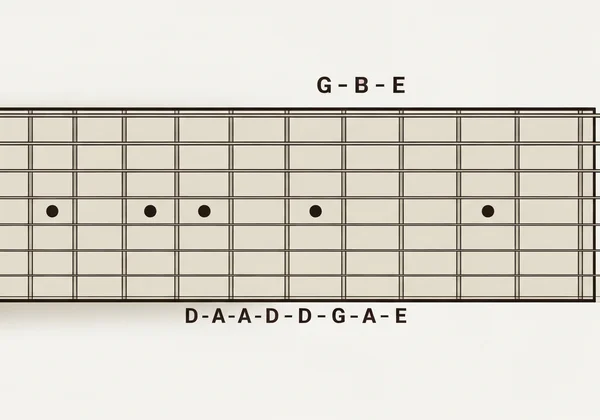
Unlocking Celtic, Folk, and Ambient Sounds with DADGAD
DADGAD transforms your guitar's voice. The low bass D drones with open A and D strings—ideal for Celtic jigs and reels. This setup allows melodies and bass notes to ring out against each other in a way that's difficult to achieve in standard tuning.
Artists like Pierre Bensusan, Al Petteway, and Martin Simpson built careers on DADGAD. Jimmy Page even used it for Led Zeppelin's 'Kashmir' epic. It crafts atmospheric music that fills any room.
How to Tune Your Guitar to DADGAD with Our Online Tuner
Getting into an alternate tuning might sound intimidating, but it's incredibly simple with the right tool. Forget about expensive pedals or confusing apps. A precise online chromatic tuner is all you need.
Our powerful online instrument tuner is designed for accuracy and ease of use, making it the perfect partner for exploring DADGAD and other alternate tunings.
Step-by-Step: Using Our Chromatic Tuner for DADGAD
Follow these simple steps to get your guitar into DADGAD tuning perfectly in minutes.
-
Open the Tuner: Head to our free tuner on your computer, tablet, or phone.
-
Allow Microphone Access: Your browser will ask for permission to use your device's microphone. Click "Allow" so the tuner can hear your guitar.
-
Tune the 6th String (E to D): Pluck your thickest string (the 6th string). The tuner will show it's an E. Slowly turn the tuning peg to loosen the string until the needle on the tuner is centered perfectly on D.
-
Tune the 2nd String (B to A): Next, pluck your 2nd string. It will register as a B. Loosen this string until the tuner shows you've hit a perfect A.
-
Tune the 1st String (e to D): Finally, pluck your thinnest string (the 1st string). Loosen it until the tuner indicates a stable D.
-
Double-Check All Strings: Go back and check all six strings one more time: D-A-D-G-A-D. Small changes in tension can slightly affect other strings, so a final check ensures you're perfectly in tune.

Precision Tuning: Understanding DADGAD Note Frequencies (D2-A2-D3-G3-A3-D4)
For those who want to understand the science, every musical note has a specific frequency. A high-quality tuner works by measuring this frequency. The standard scientific pitch notation for DADGAD is:
- 6th String: D2
- 5th String: A2
- 4th String: D3
- 3rd String: G3
- 2nd String: A3
- 1st String: D4
The number represents the octave. Our chromatic tuner is calibrated to these precise frequencies, ensuring you get a musically accurate tuning every single time, not just a close guess.
Troubleshooting Common DADGAD Tuning Challenges
As you venture into alternate tunings, you might encounter a couple of minor issues. Here’s how to handle them:
- String Buzz: Because you've lowered the tension on three strings, you might notice a slight buzzing against the frets. This is often normal. If it's excessive, your guitar may need a slight setup adjustment (truss rod or bridge action).
- Tuning Instability: When you first tune down, the strings might not "settle" immediately. After tuning, gently stretch each string you changed and then re-tune. This helps them hold their new pitch more reliably.
- Noisy Environment: Trying to tune by ear in a noisy room is nearly impossible. This is where our visual tool excels. You can rely on the screen's feedback, not just your ears, for a perfect tune.
Essential DADGAD Chords & Fingerings to Get Started
You're in tune! Now for the fun part: making music. The beauty of DADGAD is its simplicity. You can create beautiful, complex-sounding chords with just one or two fingers.
Your First Open String & Basic DADGAD Chord Shapes
First, just strum all the open strings. That beautiful, ringing sound is a Dsus4 chord. It’s your new home base.
Now, try these simple shapes. Notice how much sound you get from so little effort.
- Simple D Major: Place your index finger on the 2nd fret of the 3rd string (G string). Strum all six strings. It's a full, wonderful D chord.
- Simple G Chord: Place your index finger on the 2nd fret of the 5th string (A string). Strum everything.
- Simple A Chord: Place your index finger on the 2nd fret of the 4th string (D string) and your middle finger on the 2nd fret of the 3rd string (G string).
Experiment by just moving a single finger up and down a single string while letting the others drone. You'll discover melodies and moods you never knew your guitar had.
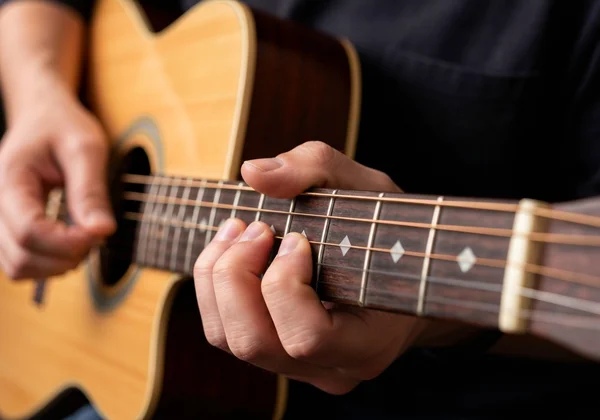
Exploring Common Scales and Arpeggios in DADGAD
A great way to learn the new layout of the fretboard is to play a simple D major scale. You'll find new patterns and fingerings emerge naturally. Because of the tuning's open nature, playing arpeggios (the notes of a chord played one by one) sounds especially beautiful. Try playing simple patterns across the strings and listen to how the notes sustain and interact with each other.
Beyond the Basics: Playing & Exploring in DADGAD
Once you're comfortable, the real adventure begins. DADGAD is not just a tuning; it's a new canvas for your musical expression.
Integrating DADGAD into Your Existing Repertoire
Try playing a simple song you already know in DADGAD. A folk song or a simple pop melody can take on a completely new character. You might find that the key or the chord voicings change, leading you to a fresh interpretation of a familiar tune. This is a fantastic way to break out of a creative rut.
Maintaining Intonation & String Health for Alternate Tunings
Frequent tuning changes wear out strings fast. Love DADGAD? Dedicate a guitar to it.
Additionally, changing string tension can affect your guitar's intonation (how in-tune it plays all the way up the neck). You can use our online chromatic tuner to check this. Play an open string and make sure it's in tune, then play the same string at the 12th fret. It should be the exact same note, one octave higher. If it's sharp or flat, your guitar may need a professional setup.
Master DADGAD Tuning with Our Online Tools
Exploring alternate tunings like DADGAD is one of the most rewarding things a guitarist can do. It opens up new sonic worlds, inspires creativity, and helps you see the fretboard in a whole new light. The only barrier is getting into tune accurately and easily.
With our tuner, that barrier is gone. Our tool is always free, always accurate, and always available on any device with a browser. There's nothing to download and no ads to get in your way. Just pure, precise tuning.
Grab your guitar, Tune your guitar to DADGAD, and dive into Celtic vibes today.
Frequently Asked Questions About DADGAD Guitar Tuning
What exactly does DADGAD stand for in guitar tuning?
DADGAD simply stands for the notes of the six open strings, from the lowest pitch (thickest string) to the highest pitch (thinnest string): D-A-D-G-A-D.
Is an online chromatic tuner accurate enough for DADGAD tuning?
Absolutely. A high-quality online tool like ours is extremely accurate. It uses your device’s microphone to analyze the specific frequency of the note you're playing, making it just as reliable as a physical clip-on tuner for any tuning, including DADGAD.
How do I switch back to standard EADGBe tuning after DADGAD?
You use the exact same process in reverse. Use our free online tuner and bring the strings you changed back up to their original pitch. Tune the 6th string up from D to E, the 2nd string up from A to B, and the 1st string up from D to E.
What are the main benefits of using DADGAD over standard tuning?
The primary benefits are its rich, droning sound that is perfect for folk and Celtic music, its ability to make simple chord shapes sound full and complex, and its power to inspire new melodic ideas by breaking you out of familiar fretboard patterns.
Can I use Tuner.wiki on my phone to tune my guitar to DADGAD?
Yes, you can! Our tuner is a web-based tool that works directly in the browser of any modern smartphone, tablet, or computer. Just visit the website, grant microphone access when prompted, and you're ready to tune anywhere, anytime.