 Tuner.wiki
Online Tuner Guide: Harp, Mandolin & Oud Tuning Made Simple
Have you ever struggled to find reliable tuning information for your harp, mandolin, or oud? Unlike standard guitars or ukuleles, these beautiful instruments often come with unique challenges. This can leave even experienced musicians feeling frustrated. Are you looking for a simple way to get perfect pitch?
This guide demystifies the process of tuning these uncommon string instruments. We will show you how to use a free and accessible online tool to achieve a professional sound. With the right knowledge, you can tune your instrument with confidence, regardless of your experience level. It's all possible with a simple online chromatic tuner.
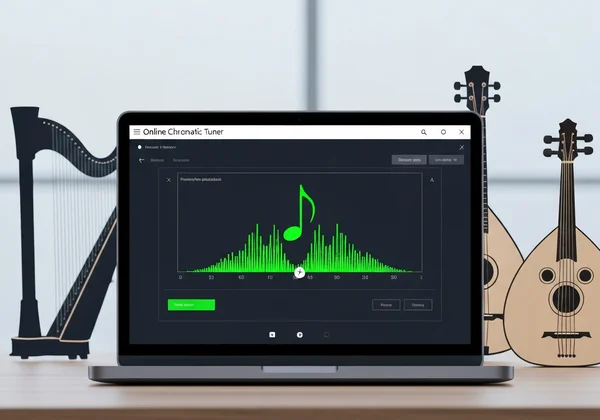
Understanding Your Instrument's Unique Tuning Requirements
Every string instrument has its own personality, and tuning is where you first get to know it. The harp, mandolin, and oud are especially unique. Understanding their specific needs is the first step toward creating beautiful music. This section explores the fundamentals you need to know before you even play a note.
Harp Tuning Fundamentals: From Lever to Pedal Harps
Tuning a harp can seem like a monumental task due to its large number of strings. The key is to understand the type of harp you have. Lever harps are typically diatonic, meaning they are set to a specific key. In contrast, pedal harps are fully chromatic, allowing you to play in any key.
- Standard Tuning: Most harps are tuned to the key of C-flat major. This allows for easy key changes using the levers or pedals.
- String Tension: Harp strings are under immense tension. It’s crucial to tune them in a specific sequence, often starting from the middle C and working your way out. This helps distribute the pressure evenly across the soundboard.
- Pitch Stability: New strings or changes in humidity can cause a harp to go out of tune quickly. Regular tuning is essential for maintaining its structural integrity and sound quality.
Mandolin Tuning Nuances: Octave Pairs and Bridge Position
The mandolin's bright, cheerful sound comes from its four pairs of strings. This double-string design, known as "courses," is also what makes tuning it unique. Each pair must be tuned to the exact same pitch for a clean, clear tone.
- Standard GDAE Tuning: The standard mandolin tuning is G-D-A-E, from the lowest-pitched pair to the highest. This is the same as a violin, but the mandolin's paired strings require extra precision.
- Intonation and Bridge: The mandolin's "floating" bridge isn't glued to the body. If its position is off, your instrument might sound in tune when playing open strings but out of tune on the frets. Proper bridge placement is critical for accurate intonation.
- Alternate Tunings: Many folk and bluegrass players use alternate tunings to create different moods and simplify certain chord shapes. A reliable chromatic tuner makes exploring these styles much easier.
Oud Tuning Essentials: Quarter-Tones and Cultural Context
The oud is a fretless instrument central to Middle Eastern, North African, and Central Asian music. Its most distinctive feature is its ability to produce microtones—notes that fall between the standard Western pitches. This requires a very different approach to tuning.
- Common Tunings: There is no single standard tuning for the oud. The most common Arabic tuning is C-F-A-D-G-C, from low to high. Turkish tunings often differ.
- Fretless Design: Since the oud has no frets, the player's ear is the ultimate guide. However, a chromatic tuner is an invaluable tool for setting your foundational open-string pitches (Maqamat) correctly.
- Quarter-Tones: To play traditional melodies, you'll need to accurately find quarter-tones. You can use an online tuner to see how close you are to these "in-between" notes, training your ear to recognize them over time.
Step-by-Step Tuning Process Using an Online Chromatic Tuner
Now that you understand your instrument's specific needs, it's time for the practical part. Using an online chromatic tuner is simple, fast, and incredibly effective. You don't need to download an app or buy any special equipment. All you need is a device with a microphone and an internet connection.
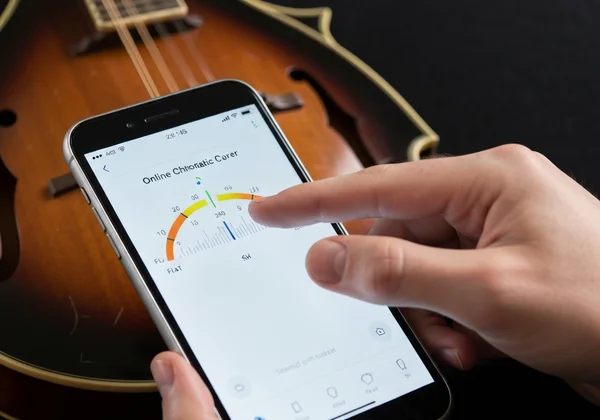
Preparing Your Device and Instrument for Tuning
A little preparation goes a long way toward achieving an accurate tune. Before you start, take a moment to set up your space and your instrument for success.
- Find a Quiet Space: Background noise can interfere with your microphone's ability to pick up the sound of your instrument. Find the quietest room you can.
- Position Your Microphone: Place your laptop, tablet, or phone close to your instrument, about 1-2 feet away. This ensures the microphone captures a clear, direct signal.
- Clean Your Strings: Wipe down your strings with a clean, dry cloth. Dirt and oil can dampen the vibrations and affect pitch accuracy.
With your environment ready, you can now use a powerful and easy-to-use tool to get started.
The Tuner.wiki Workflow: From Authorization to Accuracy
Our online tool is designed to be intuitive and user-friendly. The process is the same whether you're tuning a harp, mandolin, or oud. Here’s how it works:
-
Visit the Website: Open your browser and go to Tuner.wiki.
-
Authorize Your Microphone: The website will ask for permission to use your microphone. Click "Allow." This is necessary for the tuner to hear your instrument.
-
Play a Single Note: Pluck one string on your instrument clearly and let it ring out.
-
Read the Interface: The tuner will instantly display the note you are playing. A visual indicator will show if the note is flat (too low) or sharp (too high).
-
Adjust and Repeat: If the note is flat, tighten the tuning peg slightly. If it's sharp, loosen it. Pluck the string again and adjust until the tuner shows the note is perfectly in tune. Repeat this for all strings.
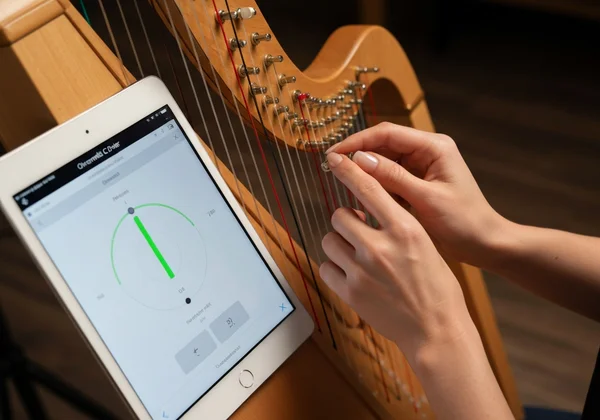
Advanced Tuning Techniques for Each Instrument
Once you're comfortable with the basic workflow, you can use an online chromatic tuner for more advanced tasks.
- Harp: For lever harps, tune all strings to their "natural" (flat) position first. Then, engage the levers one by one to check the sharpness of each note. This ensures your levers are regulated correctly.
- Mandolin: When tuning a pair of strings, pluck them one at a time to get them individually in tune. Then, pluck them together to check for any "beating" or wavering sound, and make micro-adjustments until the sound is perfectly smooth.
- Oud: To practice hitting quarter-tones, first tune your open strings accurately. Then, while watching the tuner, press a string down on the fingerboard and try to land exactly 50 cents sharp or flat from a standard note. This is excellent ear training.
Troubleshooting Common Tuning Issues
Sometimes, even with a perfect tuner, an instrument just won't cooperate. Tuning problems are often symptoms of other issues. Learning to diagnose them is a key skill for any musician. If you are struggling, a good first step is to check your pitch with an accurate online tuner.
When Your Harp Refuses to Stay in Tune
A harp that constantly goes out of tune can be very frustrating. This instability often points to one of a few common culprits.
- Loose Tuning Pins: If a tuning pin feels too easy to turn or slips back after tuning, it may need to be reseated or replaced by a professional luthier.
- Environmental Changes: Harps are very sensitive to humidity and temperature. Sudden changes can cause the wood to expand or contract, throwing the entire instrument out of tune. Try to keep it in a stable environment.
- Old Strings: As strings age, they lose their elasticity and ability to hold pitch. If your harp is unstable and the strings look worn, it might be time for a new set.
Mandolin Buzzes and Intonation Problems
A buzzing sound or poor intonation can ruin the mandolin’s sweet voice. These issues are almost always mechanical, not just a matter of tuning.
- Diagnosing Buzz: A buzzing sound can come from a loose tuning peg, a poorly seated bridge, or a string hitting a fret. Isolate which string is buzzing and check its path from the tailpiece to the nut.
- Adjusting the Bridge: If your open strings are in tune but fretted notes are sharp or flat, your bridge position is likely off. Gently nudge the bridge forward or backward until both open and fretted notes (at the 12th fret) are in tune.
- Replacing Strings: Mandolin strings are under high tension and can wear out quickly. If a string sounds dull or won't hold its pitch, replace the pair.
Oud Tuning Challenges in Different Temperaments
The oud's fretless nature presents unique challenges, especially when playing with other instruments tuned to the Western equal temperament system.
- Temperament Clashes: Traditional oud music uses "just intonation," where intervals sound purer than in the equal temperament system used by pianos and guitars. When playing with others, you may need to slightly adjust your tuning to find a happy medium.
- String Stretching: New oud strings, especially nylon or gut strings, stretch significantly. You will need to retune them very frequently for the first few days until they stabilize.
- Playing Style: Your picking or plucking intensity can slightly alter the pitch. If you play hard, the note will momentarily go sharp. This is a natural part of the instrument's character that skilled players use for expression.
Unlocking Your Instrument's Full Potential
Ready to unlock the full potential of your unique instruments? Mastering their tuning is the key that opens up new musical horizons. It ensures your performances and practice sessions always sound their best. While these instruments have their quirks, tuning them doesn't have to be a complicated mystery. With the right knowledge and a modern tool, the process becomes simple and precise.
By understanding your instrument's unique needs and using a reliable tool, you can tune with precision and confidence. You can move past the technical hurdles and focus on what truly matters: making music.
Ready to experience perfect tuning for your unique instrument? Visit Tuner.wiki today and discover how easy professional-quality tuning can be.
Frequently Asked Questions About Tuning Uncommon Instruments
Can a standard online tuner accurately tune instruments with quarter-tones like the oud?
Yes, absolutely. A good chromatic tuner detects the pitch of any note you play. While it may not have a specific "quarter-tone" setting, it will show you how many "cents" (1/100th of a semitone) you are away from a standard note. This visual feedback is perfect for learning to hear and play microtones accurately.
How often should I tune my harp compared to other string instruments?
You should check your harp's tuning before every playing session. Harps are very sensitive to their environment and can drift out of tune daily. For pedal harps, a full, thorough tuning is recommended at least once a week, with minor touch-ups before you play.
Is it possible to tune a mandolin without a specialized tuner?
Yes. With an online chromatic tuner like the one on Tuner.wiki, you can tune a mandolin perfectly. You don't need a special clip-on or pedal tuner. A device with a microphone is all it takes to use our free online tuner and get each pair of strings sounding just right.
Why does my oud change pitch so dramatically when I play hard?
This is a characteristic of many fretless string instruments. When you pluck a string with more force, you temporarily increase its tension, causing the pitch to go sharp for a moment. Experienced oud players control this effect as a form of musical expression. It is not necessarily a sign of a tuning problem.
Are there any special considerations when tuning vintage or antique instruments?
Yes, be very cautious. Older instruments, especially harps, may not be able to handle the tension of modern standard tuning. Strings can break, and in the worst case, the instrument's frame could be damaged. If you have a vintage instrument, it's best to consult a luthier before attempting to tune it to a new pitch.