 Tuner.wiki
Master Ear Training for Tuning: Develop Relative Pitch (Even Without an Online Tuner)
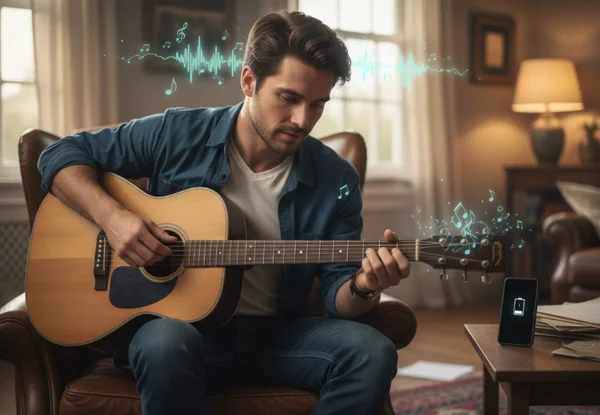
In our modern digital music world, getting your instrument in tune has never been easier. With just a few clicks, you can access a chromatic tuner tool that tells you exactly how to adjust your strings. However, what happens when your phone battery dies right before a rehearsal? What do you do if you find yourself in a situation where you cannot use digital tools?
Bạn có bao giờ cảm thấy lạc lối khi cố gắng lên dây đàn bằng tai không? Đối với nhiều nhạc sĩ, nỗi sợ bị mất công cụ kỹ thuật số là có thật. Mặc dù công nghệ là một nguồn tài nguyên tuyệt vời, nhưng việc phụ thuộc quá nhiều vào nó có thể hạn chế sự phát triển âm nhạc của bạn. Học cách nghe chính xác cao độ là một kỹ năng nền tảng giúp bạn kết nối sâu hơn với âm nhạc của mình.
Ear training is not a mysterious gift reserved for professional composers. It is a practical, learnable skill that any beginner can master with a bit of daily practice. This guide will help you understand how to develop your ears so you are always ready to play, regardless of the technology available. We will show you how to use this online instrument tuner as a partner in your training rather than a crutch.
Understanding Relative Pitch vs. Perfect Pitch
Before you start training, it is important to understand what you are actually trying to achieve. Many beginners confuse "Perfect Pitch" with "Relative Pitch." Understanding the difference will help you set realistic goals and realize that a great ear is within your reach.
What is Relative Pitch and Why It Matters for Tuning
Relative pitch is the ability to identify or recreate a musical note by comparing it to a known reference note. For example, if someone plays a "C" and then plays a "G," a musician with relative pitch can recognize that the second note is a perfect fifth higher than the first.
This skill is incredibly important for tuning because most instruments are tuned based on the relationship between strings. On a guitar, if your low E string is correct, you can tune every other string by listening to the distance (or interval) between them. This makes you much more independent as a performer. It also helps you stay in tune with other musicians during a live performance when the temperature might cause everyone's pitch to drift slightly. Using dedicated relative pitch exercises will help solidify these connections.
The Myth of Perfect Pitch: Why You Don't Need It
There is a common misconception that you must be born with a "musical ear" to be a good player. This often refers to Perfect Pitch, the rare ability to name any note without a reference. In reality, true Perfect Pitch is estimated to occur in only 1 in 10,000 people. Most of the famous musicians you admire actually rely on highly developed relative pitch.
Focusing on relative pitch gives you 95% of the benefits of perfect pitch with only 5% of the effort. You do not need to know what a "B-flat" sounds like in total silence. You simply need to know how a "B-flat" sounds in relation to the note you just played. By using an online chromatic tuner to provide your starting reference note, you can build a professional-level ear through consistent practice.
Foundational Ear Training Exercises
Developing your ear is like training a muscle. You cannot expect to have perfect tuning intuition overnight, but you can see significant progress by practicing simple exercises. These building blocks will help you recognize the "space" between notes.
Interval Recognition: The Building Blocks of Tuning
Intervals are the distances between two notes. In the world of tuning, certain intervals are more important than others. For instance, the octave is the most basic interval. If you can hear an octave, you can ensure your instrument is consistent across the entire fretboard or fingerboard.
To practice this, try the following:
- Play a note on your instrument.
- Try to sing the note that is an octave higher.
- Check your accuracy using a guitar tuner mode.
- Repeat this with "Perfect Fifths," which are the foundation for tuning violins, cellos, and the lower strings of a guitar.
Learning these intervals allows you to hear when a string is "sharp" (too high) or "flat" (too low) compared to where it should be.

The Reference Note Method: Starting Your Tuning Journey
The most common way to tune without a full-screen digital display is the reference note method. This involves getting one single note perfectly right and then tuning the rest of the instrument to that note. Traditionally, musicians use "A=440Hz" as their standard.
To use this method:
- Access a reliable online tuner and play the reference note for your instrument (like the A string).
- Listen closely to that pitch and match your string to it.
- Once that string is perfect, use your knowledge of intervals to tune the next string.
- On a guitar, for example, the 5th fret of the low E string should sound exactly like the open A string.
Harmonic Series Recognition: Advanced Tuning Precision
For string players, using harmonics is the "pro secret" for high-precision tuning. When you lightly touch a string at certain points (like the 5th, 7th, or 12th fret) without pressing down, you produce a clear, bell-like tone called a harmonic.
Harmonics produce pure frequencies, making tuning discrepancies obvious. Listen for a pulsing ‘beat’ between notes. As pitches align, the beating slows. Perfect tuning silences it completely. Practice playing harmonics and listening for that pulse. It is the most accurate way to verify your ear's work.
Practical Tuning Without Technology
Once you have the basics down, you need a plan to integrate these skills into your daily life. Turn ear training into a habit. Soon, your brain will recognize pitch instinctively.
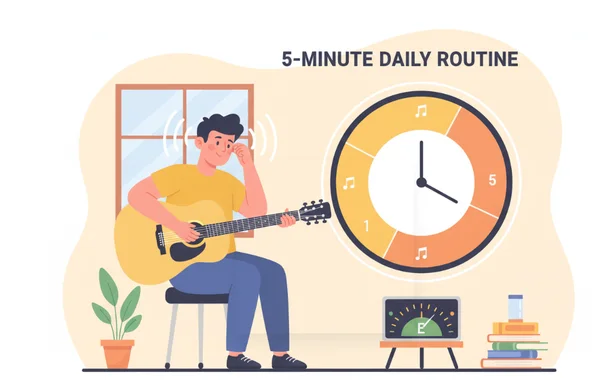
The 5-Minute Daily Ear Training Routine
You do not need hours of practice to see results. With short daily sessions, you’ll likely notice easier pitch matching in 3–4 weeks—like tuning your ears as you would your guitar!
- Minute 1: Play a reference note from a chromatic tuner and sing it back.
- Minutes 2-3: Try to tune your instrument by ear using the reference note method.
- Minute 4: Use the visual interface of our website to check how close you got.
- Minute 5: Adjust any errors and spend a moment listening to the "correct" sound so your brain remembers it.
The ‘guess and check’ method builds confidence by linking your ears to your instrument’s pitch.
Environmental Factors That Affect Pitch Perception
It is important to remember that pitch is a physical phenomenon. Your ears can sometimes be tricked by your surroundings. Temperature and humidity play a huge role in how instruments behave. Wood is a living material that reacts to the atmosphere. When humidity rises, the wood in a guitar neck or violin body absorbs moisture and swells. This physical change increases tension on the strings, often pulling the pitch sharp.
Conversely, dry winter air causes wood to shrink, leading to a drop in pitch. Temperature shifts are equally impactful. Heat expands metal strings, causing them to go flat, while cold air causes them to contract and go sharp. Beyond the environment, the age of your strings matters too. Older strings accumulate dirt and oils, which dampens their vibration and muddies the upper harmonics.
This makes it significantly harder to hear the "beats" required for precision tuning. If you have been practicing in a loud room for an hour, your ability to perceive small changes in pitch will also decrease. If you find yourself struggling to tune by ear, take a two-minute break in silence. When you return, use a free online tuner to reset your baseline.
Troubleshooting Common Ear Training Challenges
If you are struggling, don't worry—it’s normal. One common problem is "pitch matching." Some people find it hard to tell if they are higher or lower than a note; they just know it sounds "different."
To solve this, try sliding into the note. Start intentionally flat and slowly tighten the string until you hear the pitches merge. Another common mental block is thinking you aren't "musical enough." Remember, ear training is a technical skill like typing or driving. If you can hear the difference between a friend’s voice and a stranger’s voice, you have the hardware necessary to train your ears effectively.
Ear training unlocks a deeper connection to music—no screens required. Next time you practice, try tuning one string by ear. When you’re ready, check your accuracy with our chromatic tuner and celebrate your progress!
FAQ Section
How long does it take to develop relative pitch for tuning?
With short daily sessions, you’ll likely notice easier pitch matching in 3–4 weeks. While total mastery takes years, the ability to hear if a string is "sharp" or "flat" comes quite quickly. The key is to spend 5 minutes every day using an online instrument tuner to check your work.
Can I learn to tune by ear if I've always relied on digital tuners?
Yes, absolutely! In fact, you might have a head start. Because you have used digital tuners, your brain already knows what "in tune" sounds like. You just need to learn how to identify that sound without the visual guide. Use our free online tuner as a "safety net" while you practice.
What's the best instrument for starting ear training exercises?
The piano is often considered the best instrument for reference because it stays in tune well and provides a very clear, sustained tone. However, you should always practice on the instrument you play most. If you are a guitarist, learning the specific intervals of your strings is the most practical way to start.
How does ear training relate to playing in tune with other musicians?
Tuning your instrument is just the first step. When you play in a band or orchestra, the other musicians might be slightly sharp or flat compared to a digital standard. Ear training allows you to hear these tiny differences in real-time and adjust your playing so the whole group sounds harmonious. Developing this "active listening" is what separates beginners from professionals.